Placing Ell Students in the Right Groups for English Language Arts Activities
Grouping ELL (English language learner) students in the classroom isn't a topic that comes up very much. Yet it's very relevant to teachers and administrators. How students are positioned in the uncomplicated schoolhouse setting can make or pause their learning experience. It can be the difference between inclusion and isolation. The difference betwixt support and fail. Although they may seem like small, quick decisions made almost student placement and seating, nosotros accept the opportunity to brand a powerfully positive impact on students' learning experiences.
Every commune and school is unique, so in that location's non a one-size-fits-all approach to group ELL students in the classroom. However, there are some key understandings we have about language development which are relevant across the board. Let's take a moment to consider a few best practices. These can assist u.s. make decisions based on what is best for our students.
ane. Every English language Learner Deserves a Supportive Environment for Learning
How should English learners exist placed among a single class-level team of teachers at the unproblematic level? This question comes up at the end of each school year and/or over the summer. For traditional schoolhouse settings where English learners are not the majority, there are various ways the ELLs may exist placed in classrooms. There are essential questions that should be asked. How can we place ELLs where they will receive the most equity of access to learning, and quality of service? What will provide the nigh supportive environs for learning?
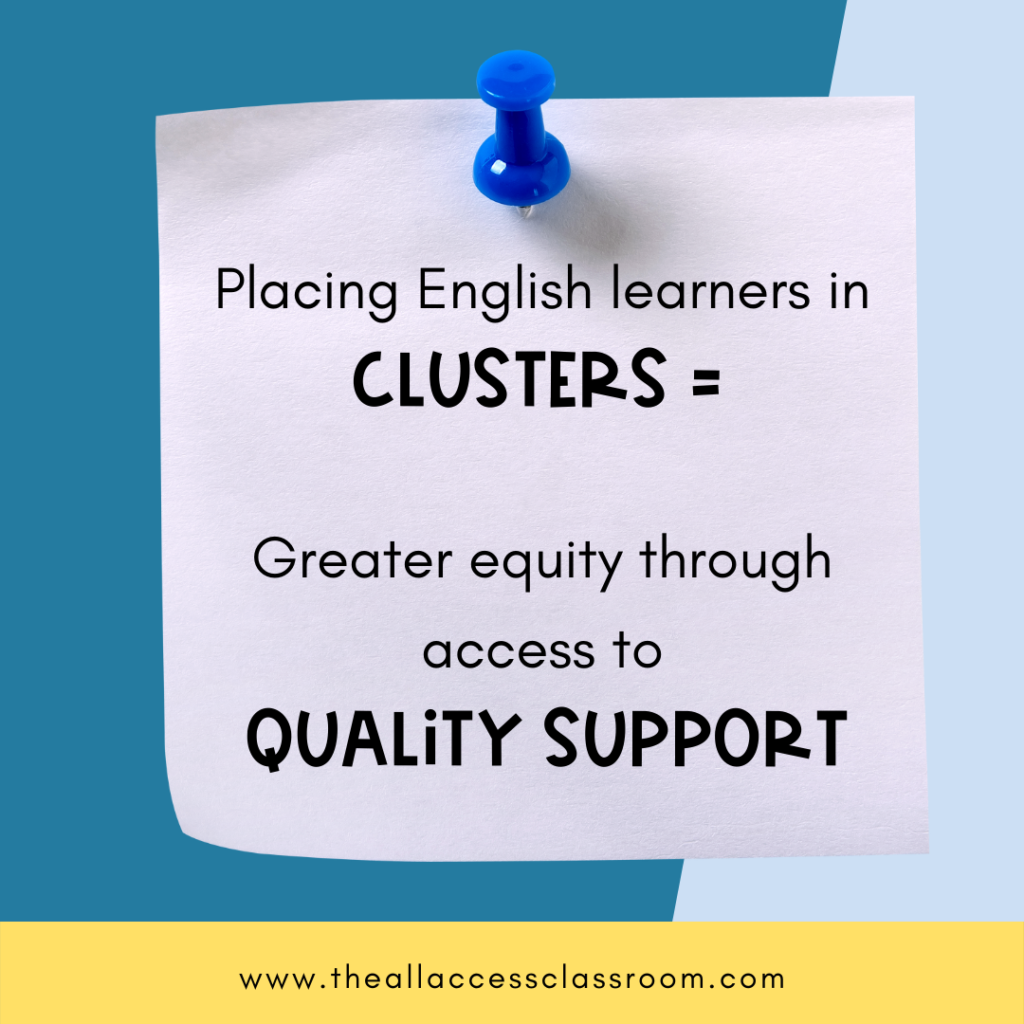
The recommendation of myself and other ELL specialists is to group, or cluster, the English learners together in i or two classrooms at each grade level. The reasons for this approach are clear when schools consider a few factors.
ELLs Learn Best When Their Melancholia Filter is Low
The affective filter is a metaphor that describes a learner'due south attitudes that bear upon the relative success of 2d language acquisition. Negative feelings such as lack of motivation, lack of self-confidence and learning anxiety act as filters that hinder and obstruct linguistic communication learning. (Colorin Colorado) When an English learner is isolated in a classroom with no peers who share his/her main language, the resulting level of anxiety may create an obstacle to learning. On the other hand, when an ELL has same-linguistic communication peers present, they may feel more than comfy, safe to have risks, and more willing to appoint.
Clustering Fosters Greater Teacher Collaboration
In many districts, ELL specialists have multiple teachers, course levels, and even schools to serve. Even so we know that when EL specialists and mainstream classroom teachers are able to collaborate, confer, and/or co-teach, the English learners do good. With fewer unique classrooms to cover, ELL specialists may take greater chapters to know and reinforce content learning. They will take fewer teachers and classrooms to become familiar with. More time for consultation, coaching, and support will open upward. Generally, the quality of back up provided to ELLs will increase if the students are clustered into 1-2 classrooms per course level.
Consider this illustration. Allow's say you are in the hospital with a status that a certain medical specialist needs to treat. Your primary doctor has told y'all that the specialist covers patients at multiple hospitals, and won't be able to run into you much in person or attend status reviews on your treatment. The specialist will come for a visit, just hasn't been able to consult with your chief dr. on what'southward going on. Only what if, instead, that specialist worked at simply two hospitals, knows them well, is familiar with the physicians and your case, and consults regularly near your health needs? Wouldn't you want the higher quality treatment from a specialist who is integrated into your health journey more directly?
I'll let you lot make the awarding to our students' learning experiences. They need their ELL teachers to be every bit bachelor, connected, and integrated as possible.
A Few Thoughts
When clustering students, information technology is of import that the ELLs be placed with the teacher(s) having the well-nigh experience and training in working with English language learners. Likewise, when the number of ELLs in a single classroom grows larger than 4-6, or near 25% of the class makeup, information technology may be advisable to spread the students across one more classroom at that point. This volition enable the ELL students to acquire alongside English-speaking peers, while even so receiving quality service and attention from the EL specialist.
Some may misunderstand this clustering approach to reflect a kind of "tracking" or separating the ELLs from their non-ELL peers. Yet, these concerns need not utilize, every bit all students in the classroom will be learning the verbal same grade-level content. What should have precedence is placing students where they will have equitable admission to that course-level content. In many cases, this is nearly likely to occur in the amassed grouping format.
ii. Classroom seating strategies for ELLs
Seating Newcomers
Ok, permit's talk about your classroom seating strategies for ELLs. Where you seat and position students in the classroom has a great affect on how well they volition exist supported.
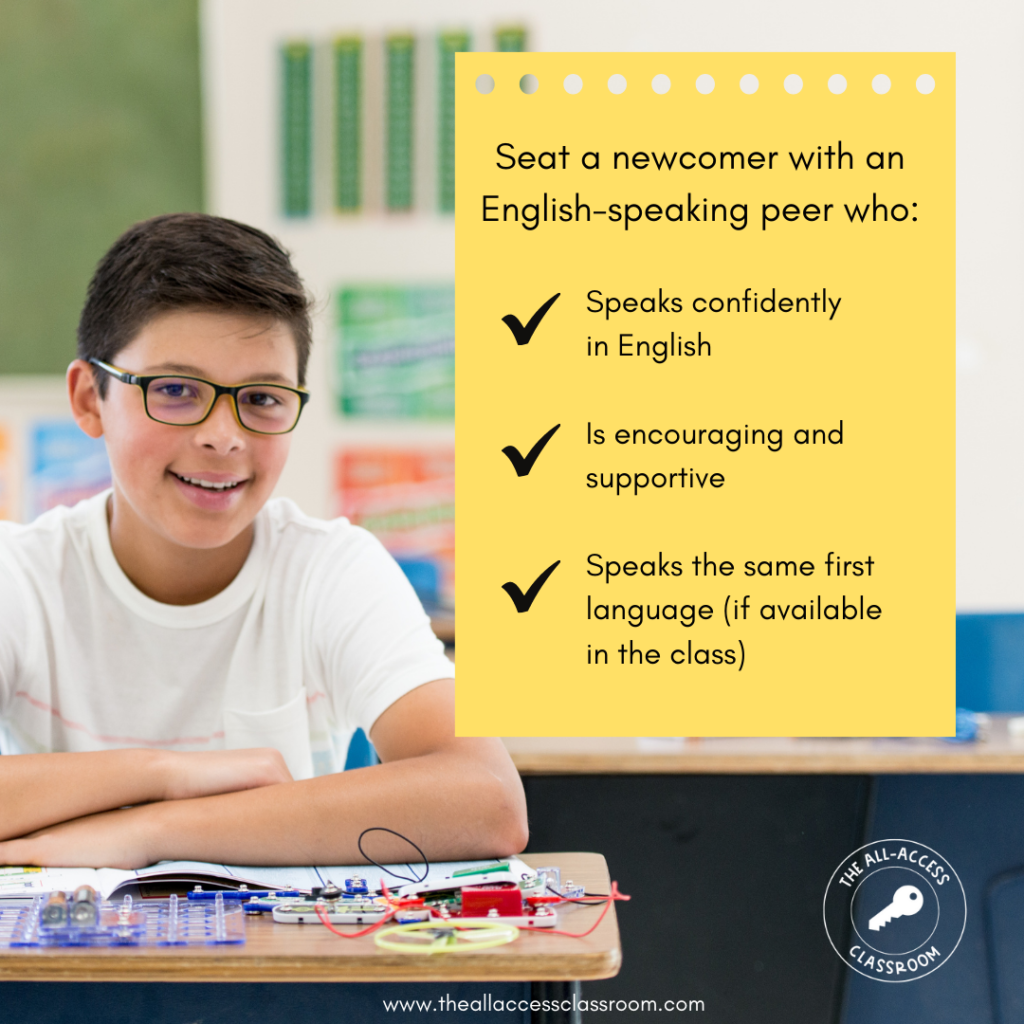
For a newcomer, you should place them next to an English language-speaking student who is confident, encouraging, and positive. If this educatee happens to speak the language of the ELL, this is ideal. The student exist there to offer essential support. They tin model the language and procedures of the classroom. Some teachers may accept concerns that this "buddy" approach may result in the English-speaking buddy becoming burned out. Or they worry that the ELL student will rely too heavily on the buddy. Keep in mind that the buddy student tin can change periodically. Using your instructor discretion and ascertainment, if yous feel that change is in club, it is appropriate as long equally the new buddy has the qualities above.
Also, you lot may wish to place the newcomer ELL close to your teacher desk expanse for ease of supportive communication. Another desk position that can be helpful is close to posted instructional data. Students volition need to see ballast charts or word walls for frequent reference.
Full general Desk System
As far as desk arrangement in general, placing ELLs (at any proficiency level) in desk-bound groups or teams has several benefits. It volition encourage collaboration, teamwork, and (most chiefly) oral advice. Students must have numerous opportunities to talk throughout the 24-hour interval in guild to learn English. Facing their peers through directed learning activities will provide this. Flexible seating can also work, offering the ELL a chance to listen and speak in a diverseness of group settings.
Classroom seating strategies have a significant impact on ELL learning. You will probable tweak your format throughout the schoolhouse year, as you discover what works best to support your ELLs.
3. Grouping ELL Students in the Classroom for Collaborative Work or Reading Groups
Collaborative work in pairs or teams is an essential element of a educatee-centered classroom. Opportunities to share, create, and problem-solve together are wonderful for language development. The nigh of import matter to retrieve equally you're grouping ELL students in the classroom for this purpose is to ensure proper supports are in place. As yous ready a new collaborative action, consider how you may need to explain directions. It may be helpful to model expectations, or demonstrate the upshot y'all're wanting for the groups.
Depending on the ELL you are considering, you lot may desire to keep them together with their peer buddy as groups motion into action. Unexpected shifts to unsupported or confusing activities can enhance that affective filter for students, leaving them disengaged and sidelined. To preclude this, either allow for peer support, or (if you're in the process of gradually moving the pupil to more independence) inquire yourself what scaffolds y'all should continue to offer. With the right preparation and construction, ELLs tin can thrive in grouping settings!
For your literacy small groups, Valentina Gonzalez recommends that you group students based on their reading level or focus skill. There should be a mix of ELL and non-ELL students. One time the small group instruction is taking place, intentional scaffolds and comprehension supports should be present. In this style, your ELL is getting equal access to cadre instruction through didactics that is considerate of their language needs. See Reading and Writing with English Learners (Gonzalez and Miller, 2020)

You Might As well Enjoy:
How Clustering Our ELs Benefits Anybody (Tan Huynh)
How to Create a Welcoming Classroom Surroundings for ELLs (Colorin Colorado)
1 of the Most Important Activities for End of School Year Closure: Asset-Based Learner Profiles (The All-Access Classroom)
How to Unlock Prior Noesis as a Reliable Fashion to Boost Student Comprehension (The All-Access Classroom)
I hope this information can exist helpful to you and your colleagues as you brand instructional decisions! I'd love to hear more about you and your English learners, so observe me on Facebook or Instagram, and let'southward chat!

Source: https://www.theallaccessclassroom.com/3-important-considerations-for-class-placement-seating-and-grouping-ell-students-in-the-classroom/

Post a Comment for "Placing Ell Students in the Right Groups for English Language Arts Activities"